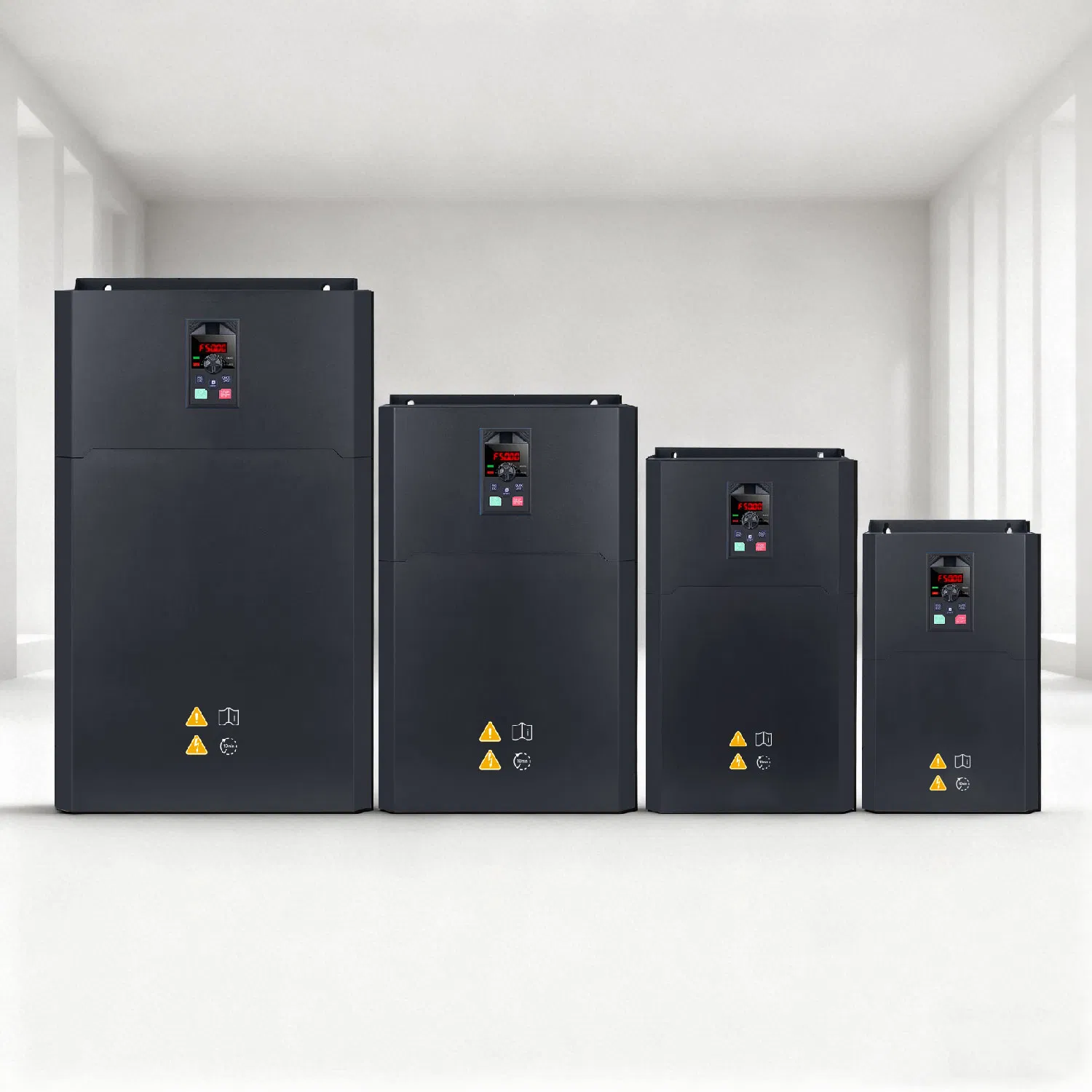
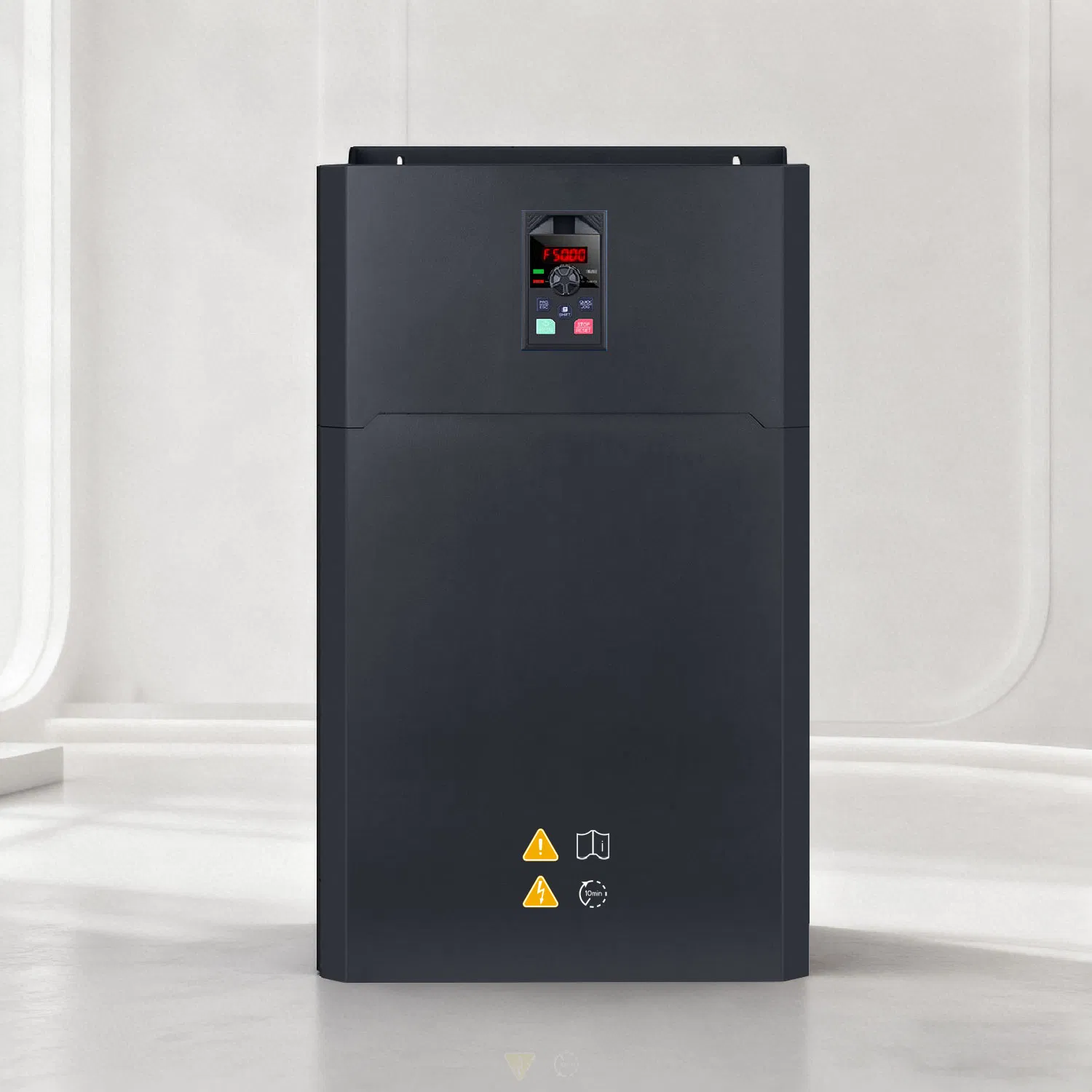
Current Vector Control: Adjust motor parameters online according to the motor's operating status to achieve optimal control of the motor.
1
Large Speed Range: Output frequency from 0 to 3000Hz.
2
Adaptive Acceleration and Deceleration: Intelligently adjust the acceleration and deceleration rates based on the load operating status.
3
Excellent Performance: Outstanding current and voltage control technology, ensuring stable and jump-free operation of the inverter with 0.1s command response.
Technical Specifications
Function Description
Specification Index
Basic Functions
Maximum Frequency
Vector: 0-300Hz; V/F: 0-3000Hz
Carrier Frequency
1kHz - 16kHz (Auto-adjustable)
Control Method
SVC (Open Loop Vector) / V/F Control
Starting Torque
0.5Hz/150% (SVC)
Overload Capacity
G Type: 150% for 60s; 180% for 1s
DC Braking
0.00Hz to Max Frequency; Time 0-30s
Operation & Protection
Input Terminals
8 Digital (1x 100kHz pulse); 2 Analog (0-10V/0-20mA)
• Impact-Free Speed Tracking: Identify motor speed and phase within 0.2s for smooth startup.
• Momentary Power Outage Support: Continued operation via energy feedback during brief outages.
• Intelligent Flux Braking: Minimized deceleration time based on operating conditions.
• MODBUS Communication: Standard protocol for easy integration with PLC and touch screens.
• Modular Design: Flexible control options adaptable to most industrial environments.
• Hot-Swap Options: Supports RS485 expansion cards and operation panels.
Certifications & Production
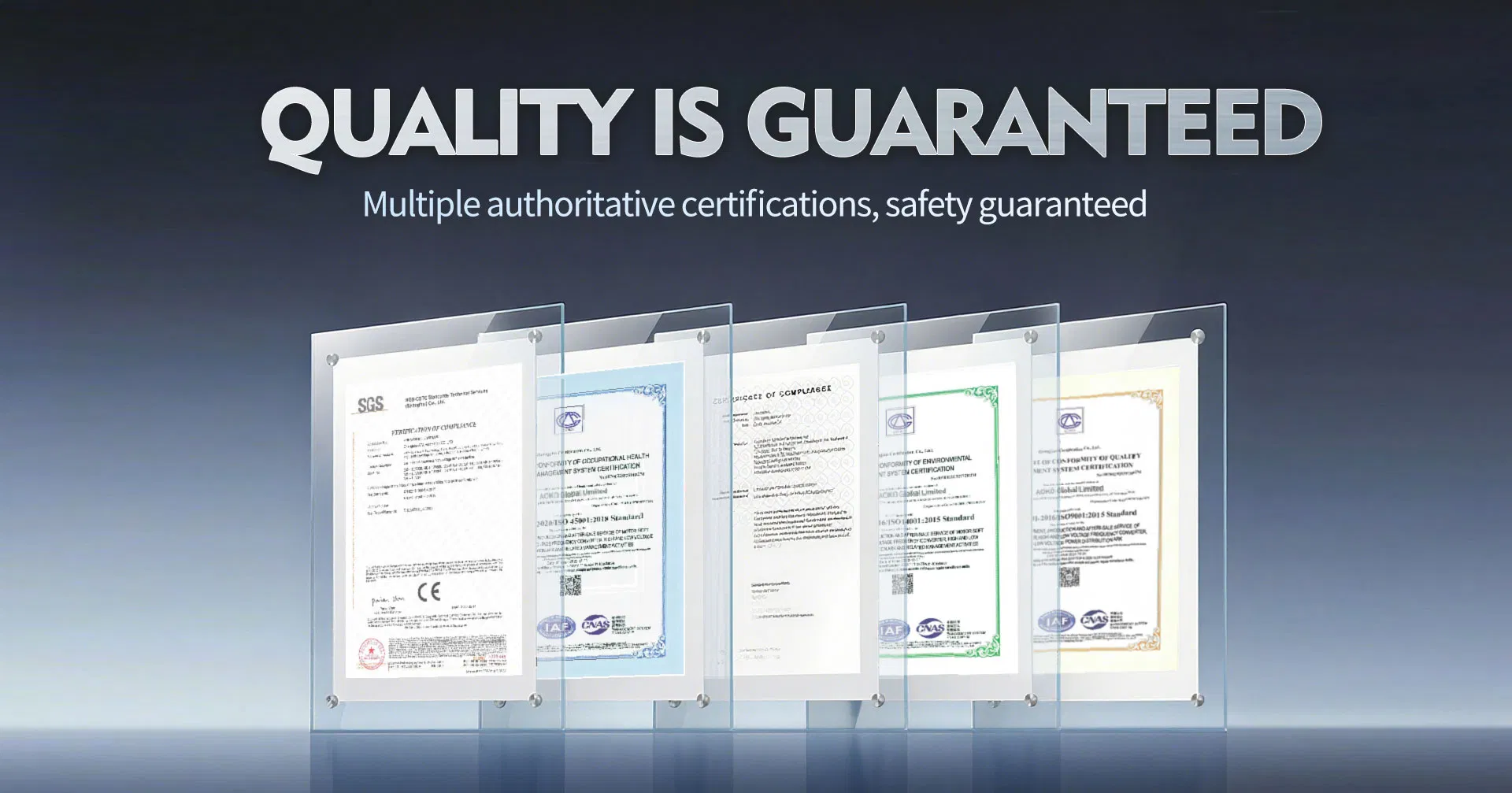
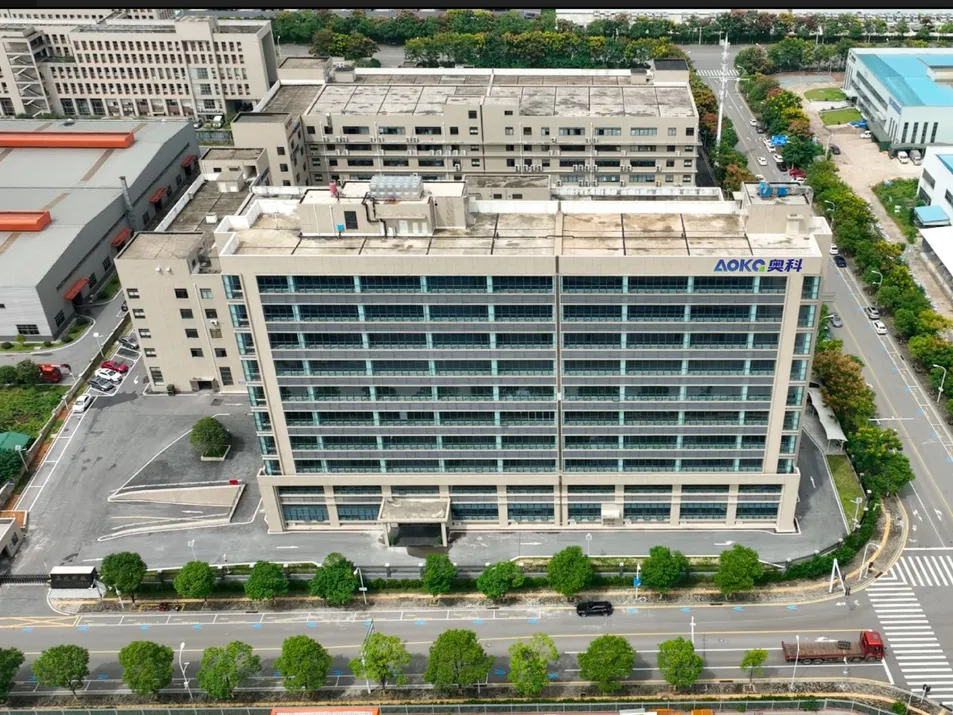
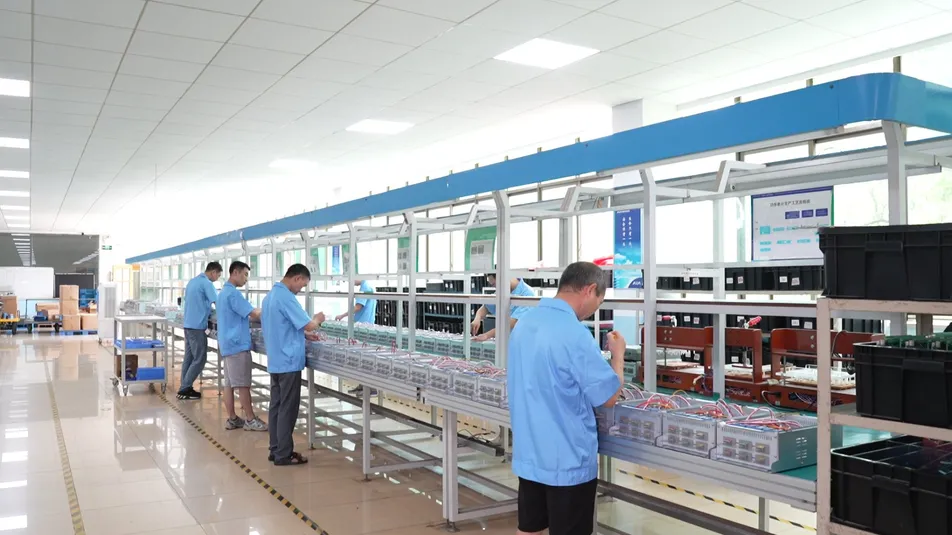
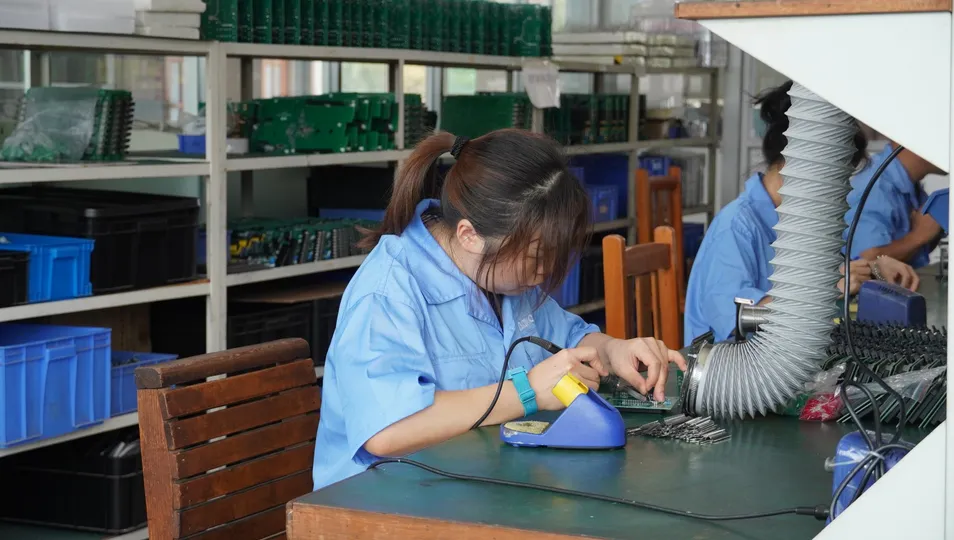
A professional manufacturer of soft starters and variable frequency drives since 1998, holding ISO and CE certification with over 80 patents demonstrating industry innovation. Rigorous quality control ensures product reliability through PCBA testing, intelligent aging tests, and 10KV medium-voltage validation. Advanced production infrastructure includes ESD-protected clean rooms and modular assembly platforms.
Frequently Asked Questions
What are the main benefits of using these VFDs?
The primary benefits include significant energy savings, precise motor speed control, and reduced mechanical stress on equipment through controlled acceleration.
How do VFDs control motor speed?
They control the speed of an AC motor by varying the frequency and voltage of the power supplied to the motor.
What kind of communication protocols are supported?
Our drives utilize the internationally standard MODBUS-RTU protocol, making them easy to integrate with PLC systems and HMI touch screens.
Can the drive handle momentary power failures?
Yes, the unit features an intelligent "instant stop without stopping" function that uses energy fed back from the load to maintain operation during brief voltage drops.
What protection features are built into the unit?
The drive includes comprehensive protection for input/output phase loss, overcurrent, overvoltage, undervoltage, overheating, and motor overload.
Is the output frequency adjustable for high-speed motors?
Yes, under V/F control, the output frequency can range from 0 up to 3000Hz, suitable for specialized high-speed industrial applications.
 NovaVolt Service