When setting up an off-grid solar system, it's crucial to consider the components that enhance efficiency and reliability. A top-notch inverter is the heart of your system, but accessories play a vital role as well. What are the essential accessories for an off-grid inverter? Identifying these accessories can significantly improve your energy independence.
Consider solar charge controllers, which regulate the power flowing from solar panels. They protect batteries and ensure longevity. Battery cables are another essential; they ensure optimal energy transfer between components. Additionally, safety disconnects are important for maintenance and emergencies. These items are not just add-ons but critical for a well-functioning system.
Without these accessories, you could face inefficiencies. Each component you choose should match your inverter's specifications. Research is necessary to find the best options for your needs. You might discover pros and cons in various products. Reflecting on your choices helps ensure a sustainable off-grid lifestyle.
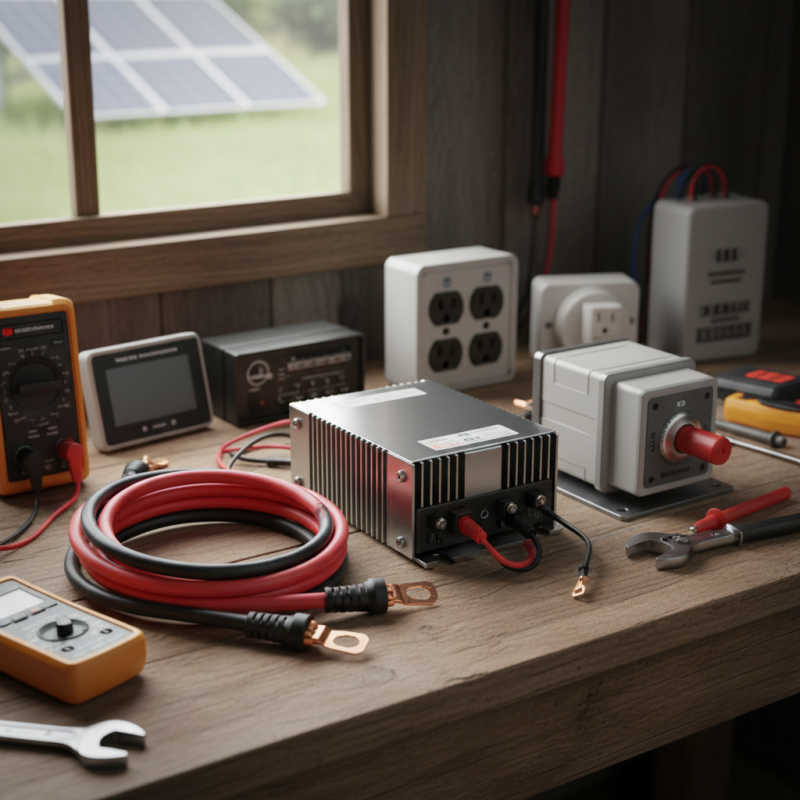
Essential Components for Off Grid Inverter Setup
When setting up an off-grid inverter, having the right accessories is crucial. Key components ensure optimal performance and efficiency. Start with high-quality batteries. They store energy generated by solar panels or wind turbines. Choose deep-cycle batteries designed for consistent discharge. This choice prolongs their lifespan and enhances reliability.
Next, consider a robust charge controller. It regulates the voltage and current coming from your energy source. A good charge controller prevents battery overcharging. This element is often overlooked, yet it plays a significant role in system longevity. Additionally, ensure proper wiring and connectors. These need to be suited for your system's voltage and current. High-quality wires reduce energy loss and prevent overheating.
Without proper grounding equipment, safety could be compromised. Grounding minimizes shock risks and ensures your system operates reliably. Furthermore, invest in a sound inverter enclosure. This protects your inverter from environmental factors. It also improves airflow, which helps manage heat. Each component works together, creating a balanced and effective off-grid system. Assessing your needs may require adjustments, as no two setups are identical.
Consider your energy demands and location to refine your choices.
Battery Selection: Types and Considerations for Off Grid Systems
When selecting batteries for off-grid systems, several key factors come into play. One major consideration is the type of battery technology.
Lead-acid batteries are popular due to their reliability and lower cost. However, they require regular maintenance and have a shorter lifespan.
In contrast, lithium-ion batteries offer longer life and less maintenance but come with a higher price tag.
Understanding these trade-offs is essential.
Choosing the right capacity is also crucial. This involves estimating daily energy consumption and ensuring the battery bank can handle those needs.
A common mistake is underestimating energy usage on cloudy days. It’s wise to leave a buffer to avoid depleting the batteries too quickly.
Additionally, the depth of discharge (DoD) is an important factor. Keeping lead-acid batteries above a certain DoD can extend their lifespan significantly.
Lastly, consider the installation environment. Batteries should have proper ventilation and protection from extreme temperatures.
Overheating can lead to inefficiencies and safety issues. Regularly monitoring battery health helps detect problems early.
This vigilance can enhance reliability in an off-grid setup. Remember, each choice impacts the overall system performance. Careful planning will pay off in the long run.
Charge Controllers: Importance and Functionality Explained
When setting up off-grid systems, charge controllers are crucial. Their primary role is to regulate voltage and current from solar panels to batteries. Without them, batteries risk overcharging or discharging too much, potentially leading to damage. According to a report by the National Renewable Energy Laboratory (NREL), effective charge management can enhance battery life by 30%. This highlights the controller’s importance in any renewable energy setup.
To maximize efficiency, choosing the right type of charge controller is essential. There are two main categories: PWM (Pulse Width Modulation) and MPPT (Maximum Power Point Tracking). PWM controllers are simpler and suitable for small systems. However, MPPT controllers are more efficient, especially in larger systems, offering up to 30% more power. Proper selection ultimately impacts energy output and battery health.
Tip: Regular maintenance of charge controllers can prevent failures. Check connections and clean terminals periodically.
Another consideration is placement. Charge controllers should be installed in well-ventilated areas to avoid overheating. Heat can significantly reduce efficiency, causing potential long-term issues. Ensure that your system’s capacity aligns with the solar array and battery size, as mismatches can lead to poor performance.
Tip: Monitor the charging status regularly. Small issues can escalate if left unchecked.
Wiring and Cables: Best Practices for Off Grid Inverter Connections
When setting up an off-grid inverter, wiring and cables play a crucial role. Proper connections ensure efficiency and reliability. Inadequate wiring can lead to energy loss and safety hazards. Use high-quality, appropriately-rated cables for your system. Look for cables that are UV resistant and suitable for high temperatures. This helps increase their lifespan and performance.
Pay attention to the wire gauge. A thicker wire can handle more current, reducing resistance and improving efficiency. However, many people opt for wires that are too thin, which is a common mistake. Ensure your wiring is not just suitable for your inverter, but also for the total load of your system. It’s important to double-check your connections. Loose connections can lead to overheating.
When installing cables, consider routing them properly to avoid physical damage. Use protective conduits where necessary. Ensuring that cables are secured and not in contact with sharp edges prevents wear and tear. Neglecting these details may seem minor, but they significantly impact the system's longevity. Regular inspection of your wiring can identify potential issues before they become critical.
Top 10 Must Have Accessories for Off Grid Inverters
Monitoring Systems: Keeping Track of Your Off Grid Energy Use
Monitoring systems play a crucial role in managing off-grid energy use. They enable users to track how much energy is being generated and consumed. By understanding these dynamics, homeowners can make informed decisions about energy use. This awareness is key in optimizing solar energy systems.
For instance, a simple display meter can show real-time energy production. Users can see how sunny conditions impact energy generation. This visual feedback encourages smarter energy habits. People may adjust their usage patterns to align with peak generation times. However, the accuracy of these readings can vary. Factors like sensor placement and calibration matter. It's essential to regularly check these systems for reliable information.
Data logging features can provide insights over longer periods. By analyzing usage trends, users can identify potential inefficiencies. This can spark reflections on energy habits and drive changes. Maybe the appliances used during peak hours are energy-hungry. Understanding these details helps in making adjustments. Being proactive with energy consumption not only saves costs but also enhances sustainability.
Top 10 Must Have Accessories for Off Grid Inverters - Monitoring Systems: Keeping Track of Your Off Grid Energy Use
| Accessory |
Purpose |
Benefits |
Estimated Cost ($) |
| Solar Charge Controller |
Regulates power going to batteries |
Prevents battery overcharging |
150 |
| Battery Management System |
Monitors battery health and performance |
Extends battery life |
200 |
| Inverter Remote Control |
Allows remote monitoring and control |
Convenience in managing energy use |
75 |
| Energy Monitoring System |
Tracks energy consumption in real-time |
Helps optimize energy use |
120 |
| Fuse Box / Circuit Breaker |
Protects the inverter and system |
Safety from overloads |
50 |
| Battery Temperature Sensor |
Monitors battery temperature |
Enhances battery performance |
30 |
| Generator (Optional) |
Backup power source |
Ensures power availability |
800 |
| Solar Panel Mounting Kit |
Secures solar panels in place |
Durability and stability |
100 |
| Power Distribution Panel |
Manages power distribution in the system |
Efficient power management |
150 |
| Smart Home Integration Device |
Connects energy system to smart home devices |
Automation and control |
100 |
Conclusion
When setting up an off-grid inverter system, it's crucial to understand what are the essential accessories for an off-grid inverter. First, selecting the right battery type is vital, as it determines the efficiency and longevity of your power storage, whether it's lithium, lead-acid, or other options. Additionally, charge controllers play a significant role in managing power flow, preventing overcharging and ensuring your batteries are maintained effectively.
Moreover, using high-quality wiring and cables is key to maximizing energy transfer and minimizing losses in your connections. Finally, integrating monitoring systems allows you to keep track of energy usage, giving you insights to manage your off-grid energy consumption efficiently. Each of these components is essential to creating a reliable off-grid setup that meets your energy needs.

 NovaVolt Service