The question, "Can a solar pump inverter work without a water tank?" raises significant considerations in the renewable energy sector. According to a report by the International Renewable Energy Agency (IRENA), solar water pumping systems are gaining traction for their efficiency in remote agricultural areas. However, operating these systems effectively often hinges on the presence of a water tank.
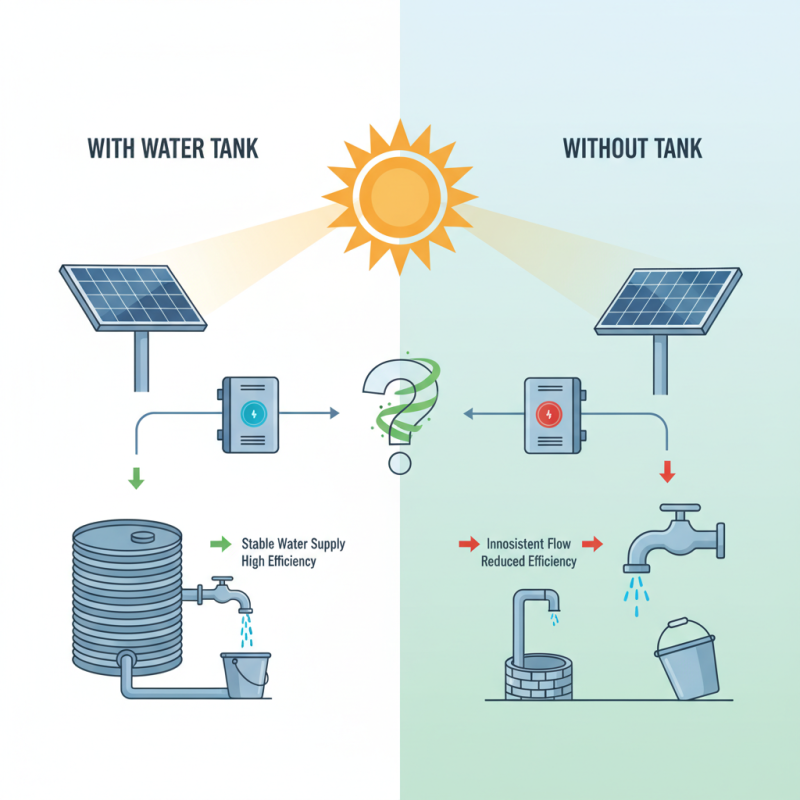
Expert Michael Green, a well-known figure in solar technology, asserts, "While a solar pump can technically function without a water tank, its efficiency relies heavily on a stable water supply." This highlights the delicate balance needed between supply and technology. Without a tank, the pump may face challenges such as inconsistent water flow, leading to potential system inefficiencies.
Data suggests that approximately 25% of solar pump installations are currently underperforming due to a lack of adequate water storage solutions. This shortfall underscores the importance of integrating water storage to maximize the benefits of solar-powered systems. Thus, exploring whether a solar pump inverter can operate independently of a tank is crucial for optimizing renewable energy applications.
Understanding Solar Pump Inverters and Their Functionality
Solar pump inverters are essential for converting solar energy into electrical power for pumps. They allow for efficient water pumping in various applications. Understanding their functionality helps to clarify some common misconceptions, including whether they can operate without a water tank.
In essence, a solar pump inverter needs a constant source for the water being pumped. Without a water tank, the system may experience challenges. The inverter requires feedback about water levels. Without it, the inverter might run dry, leading to potential damage. Additionally, some systems rely on pressure sensors that measure water flow. These sensors work poorly without a tank, making the pump less efficient.
Many users wonder about the versatility of these inverters. While they can function without a tank briefly, a sustainable setup requires some form of storage. A direct supply can lead to inconsistent operation. It's crucial to consider the system design before installation. Users might think they can skip the tank, but that decision could result in unexpected issues. Understanding these details fosters better planning for effective water pumping systems.
The Role of Water Tanks in Solar Pump Systems
Water tanks play a crucial role in solar pump systems. Their primary function is to store water, ensuring that even during low sunlight, there is sufficient supply for irrigation or domestic use. According to the Solar Energy Industries Association, effective water storage can increase the efficiency of solar pumps by up to 30%. This efficiency is vital in regions where water scarcity is a pressing issue.
In systems without water tanks, inconsistent water flow can occur. The solar pump inverter might operate intermittently, leading to inefficiency. A study by the International Renewable Energy Agency found that systems with integrated water storage have a higher success rate in maintaining consistent output. Storing water allows for better management of resources during dry spells or when solar energy is less available.
However, relying solely on a solar pump without a water tank can present challenges. It may lead to over-extraction of water resources or strain the pump system. Water tanks can sometimes incur significant upfront costs. This is an important consideration for project planners and farmers. Balancing system design with practical storage solutions is essential for sustainability in agriculture.
Can Solar Pump Inverters Operate Without a Water Tank?
Solar pump inverters can technically operate without a water tank, but this presents challenges that need careful consideration. The primary function of these inverters is to convert solar energy into electricity for pump operation. Without a water tank, the system may experience fluctuations in performance. For example, a study by the International Water Management Institute notes that optimal pump operation usually requires a steady water supply to avoid dry running.
In practical terms, running a solar pump inverter without a tank means relying on direct water sources, such as rivers or wells. However, this setup can lead to inconsistencies. According to data from the World Bank, around 30% of groundwater sources are over-exploited, which affects the reliability of such systems. The pump can run out of water, damaging the inverter and affecting efficiency.
Environmental conditions also play a role. Seasonal changes can lead to variations in water availability. Anecdotal evidence from industry experts highlights that many users face underperformance issues in dry seasons. Therefore, while it is possible for a solar pump inverter to function without a water tank, the risks and challenges necessitate a detailed assessment of water sources and local climatic conditions.
Potential Issues with Operating a Solar Pump Without Storage
Operating a solar pump without a water tank raises several potential issues. Without a storage system, the pump may run continuously when there is sunlight. This can lead to over-pumping, which could damage the system over time. Frequent cycling without sufficient water can cause wear and tear on the pump components.
In addition, the lack of a water tank means that there is no buffer for water distribution. This can create pressure fluctuations. Such fluctuations may lead to inefficient water delivery to the intended area. Inconsistent performance impacts overall irrigation plans. It also complicates the management of water levels.
Moreover, the absence of a tank can hinder the ability to operate during cloudy weather or at night. Without stored water, the pump's operation is directly tied to sunlight availability. This makes planning and execution more challenging. While solar energy is a sustainable choice, effective implementation requires careful consideration. The overall efficiency can greatly diminish without proper storage.
Alternatives to Water Tanks in Solar Pump Applications
In solar pump applications, water tanks are often seen as essential. However, there are alternatives. Direct pumping without a tank is one option. This method uses solar energy to operate the pump in real time. It can be effective in certain scenarios, such as irrigation or livestock watering.
Another alternative involves using pressure tanks. These tanks can store some water, allowing the pump to function intermittently. This reduces the risk of pump damage. The pressure tank provides a buffer against fluctuating solar energy. It also ensures a steady water supply.
Wet wells are also gaining popularity. They can collect rainwater or surface water. This makes them useful for sites lacking direct access to a reliable water source. However, wet wells require maintenance. They can breed mosquitoes or other pests if not properly cared for. Understanding the pros and cons of each option is crucial for choosing the best system. Each situation is unique and requires careful thought.
FAQS
: Yes, but it can create performance challenges.
It can damage the inverter and reduce efficiency.
They may lead to inconsistent water supply and performance.
Seasonal changes can cause variations in water availability.
It stores water and allows intermittent pump operation.
Yes, direct pumping and pressure tanks are viable options.
A structure that collects rainwater or surface water.
Users should assess water sources and possible performance issues.
No, they reduce risks but require maintenance.
Poor design can lead to unexpected challenges and inefficiencies.
Conclusion
The article "Can a Solar Pump Inverter Operate Without a Water Tank?" explores the functionality of solar pump inverters and the integral role water tanks play in solar pump systems. It addresses the question, "Can a solar pump inverter work without a water tank?" by examining the operational dynamics of these systems. While the inverter can technically function without a tank, this setup may lead to inefficiencies and operational challenges.
The piece further discusses potential issues that may arise from operating a solar pump without storage, such as inconsistent water supply and inability to manage peak usage times. It also presents alternatives to traditional water tanks, highlighting innovative solutions that can enhance the efficiency of solar pump applications without relying on storage systems. Overall, understanding the relationship between solar pump inverters and water tanks is crucial for optimizing solar irrigation and water management systems.

 NovaVolt Service