How to Save Energy with HVAC VFDs in 2026? This question matters as buildings face higher cooling loads, stricter efficiency targets, and unstable energy prices. The International Energy Agency’s Buildings 2023 report states that buildings consume about 30% of global final energy. Heating, cooling, ventilation, and fans form a significant part of that demand.
A variable frequency drive adjusts a motor’s speed instead of running it continuously at full output. How does a VFD save energy in HVAC systems? For variable-torque equipment, such as supply fans and chilled-water pumps, power demand can fall sharply as speed decreases. The U.S. Department of Energy explains that fan and pump power follows the affinity laws. A 20% speed reduction can theoretically reduce power consumption by nearly 50%. Real buildings rarely achieve the full theoretical result.
The difference appears in daily operation. At 7 a.m., a VFD may reduce an office fan from 50 hertz to 38 hertz while maintaining acceptable duct pressure. During mild weather, a chilled-water pump can slow down as valve demand declines. Sensors, control sequences, and proper commissioning determine whether these savings become real. Poorly placed sensors can create unstable airflow. Excessive minimum speeds can erase savings. Harmonics and motor compatibility also require attention, as emphasized in ASHRAE guidance on motor-driven HVAC systems.
The technology is powerful. It is not magic. Energy managers should verify baseline consumption, trend speed commands, and compare comfort data after installation. This practical review supports reliable decisions in 2026.
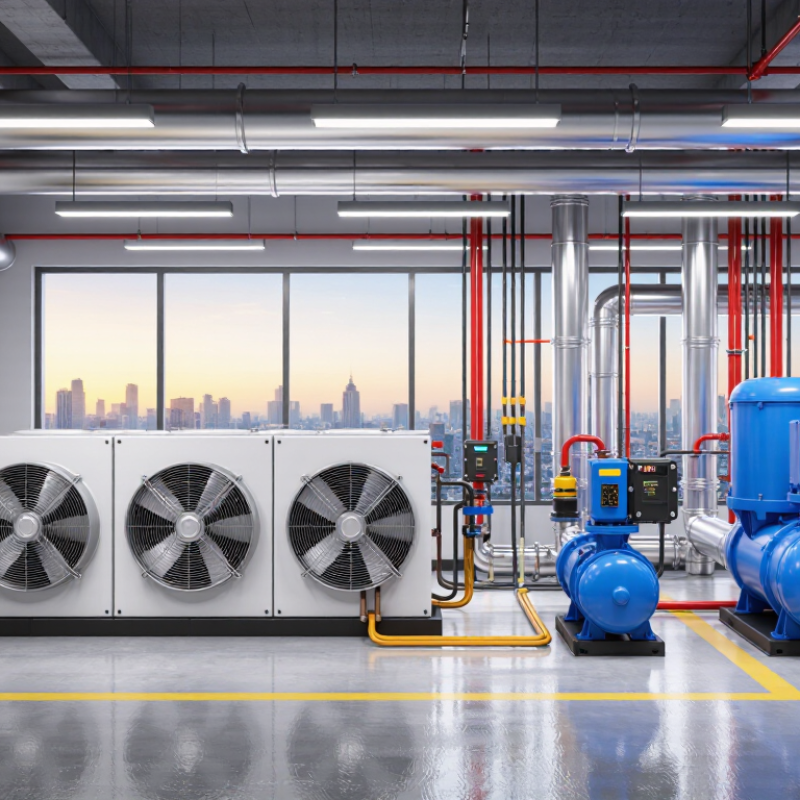
An HVAC variable frequency drive (VFD) controls an AC motor’s speed by changing the frequency of electrical power supplied to it. In a ventilation system, that motor may turn a supply fan; in a hydronic system, it may drive a pump. The drive receives a speed command from a building controller or local sensor. Simple idea.
For example, when a room’s cooling demand falls, a pressure sensor may signal the fan to slow down. The VFD reduces motor frequency, and airflow decreases without relying only on a damper to restrict air. This matters because fans and pumps often need much less power at lower speeds, though actual savings depend on system design and operating hours. Not magic.
Control settings matter. A technician should check motor compatibility, minimum speed, acceleration and deceleration limits, and sensor placement. A poorly tuned pressure loop can make a fan surge between speeds, creating noise and wasting energy. I’ve seen a sensor placed near a turbulent duct bend give unstable readings; moving it may help, but the whole system still needs testing. Very practical. VFDs also introduce electrical considerations, including motor heating at low speeds and possible interference, so installation and commissioning should follow equipment guidance.
Why HVAC VFDs Reduce Energy Use in 2026
Heating and cooling systems often run at full speed even when rooms need less airflow or water. A variable frequency drive (VFD) adjusts motor speed to match demand. This matters because fan and pump power can fall sharply as speed decreases. The U.S. Department of Energy’s Improving Fan System Performance guide describes the fan affinity relationship: power varies approximately with the cube of speed. At 80% speed, that relationship implies about 49% less fan power than at full speed. It is an engineering estimate, not a guaranteed building-wide saving.
In practice, a VFD can slow a supply fan when a meeting room empties, or reduce pump speed as heating demand eases. Less excess flow can also reduce throttling losses and mechanical stress. Small changes matter. But results depend on controls, system design, and operating hours. A poorly tuned sensor may keep equipment running faster than needed; I have seen that overlooked during commissioning. The DOE guide is useful for the underlying physics, while actual savings should be checked against metered energy before and after installation. In 2026, that measured comparison remains more credible than a single projected percentage.
How to Save Energy with HVAC VFDs in 2026?
How to Choose the Right VFD for an HVAC System
Choosing a variable frequency drive starts with the motor and the work it performs. Check the motor’s voltage, full-load current, phase, and enclosure requirements against the drive specifications. Size the VFD by motor current, not horsepower alone. A fan motor may run below full speed for much of the day, while a pump faces different load changes. The application matters.
Look at the control signal, operating range, and installation conditions. A drive in a warm mechanical room may need extra cooling clearance. Confirm that the HVAC controls can communicate with the VFD and that the motor can handle the intended speed range. Check minimum airflow or flow requirements, too; reducing speed without considering equipment limits can cause problems. A qualified technician can verify these details before installation. Small assumptions can become expensive.
Tips: Record actual operating hours and load patterns before selecting a drive. Compare the VFD’s current rating with the motor nameplate, and leave room for documented operating demands. Ask how bypass operation, alarms, and maintenance will work. Not every system saves energy in the same way. Recheck settings after commissioning, because real buildings rarely behave exactly like the design.
Install and configure the variable-frequency drive (VFD) to match the HVAC system, not just the motor. A qualified technician should verify motor compatibility, wiring, grounding, and ventilation requirements before startup. The U.S. Department of Energy’s Improving Fan System Performance sourcebook explains the fan affinity laws: under similar conditions, fan power varies roughly with speed cubed. At 80% speed, ideal fan power is about 49% lower than at full speed. Actual savings depend on duct resistance, operating hours, and control settings.
Set minimum and maximum speeds within the equipment’s operating limits. For a variable-air-volume system, connect the drive to a suitable pressure sensor and tune its control loop gradually. Check airflow at the farthest occupied rooms, not only at the main duct. Set acceleration and deceleration times to avoid abrupt starts or pressure swings. Record baseline power and airflow, then compare readings after commissioning. The first tuning pass is rarely perfect; occupied spaces and changing loads can expose problems later.
Tips: Keep required ventilation intact. Trend speed, pressure, and alarms for several weeks. If airflow hunts or rooms become noisy, review sensor placement and control settings before lowering the speed further.
How to Save Energy with HVAC VFDs in 2026?
How to Measure Savings and Optimize VFD Performance
Measuring HVAC VFD savings starts with a reliable baseline. Record fan or pump energy use, operating hours, airflow, and relevant outdoor conditions before adjusting settings. Compare similar periods, not just monthly bills, since weather and occupancy can distort results. A power meter can show kilowatt-hours directly; where that is unavailable, trend the controller’s power readings and verify them periodically. Keep the method consistent.
Tips: Log speed, pressure, and temperature alongside energy use. Check sensor placement and calibration. A loose pressure sensor can make a well-tuned VFD look inefficient. Compare results after several weeks, then review them with maintenance staff. Their observations may explain unusual readings better than a spreadsheet can.
Optimization is not simply lowering the speed. Set minimum limits that preserve ventilation, comfort, and equipment requirements, then adjust control bands gradually. Watch for hunting, noise, uneven room temperatures, or complaints from occupants. These are useful signals, even when energy use falls. Document each change and its effect, so future operators can tell what worked. Savings estimates can remain imperfect when loads vary, and that uncertainty deserves a note—not a convenient assumption. Regularly inspect belts, filters, dampers, and coils; a VFD cannot compensate for every mechanical problem.
It changes the electrical frequency supplied to an AC motor, adjusting its speed. For example, it can slow a supply fan when cooling demand drops. Not magic.
Slower fans and pumps often use less power than faster ones. Actual savings depend on system design and operating hours. It varies.
Compare the motor’s voltage, full-load current, phase, and enclosure needs with the drive specifications. Size the drive by motor current, not horsepower alone.
A poorly placed pressure sensor can send unstable readings. Near a turbulent duct bend, for instance, it may cause the fan to surge between speeds.
No. Check motor compatibility, the intended speed range, and minimum airflow or flow requirements. Low-speed operation can also increase motor heating.
Check the drive’s cooling clearance, especially in a warm mechanical room. Electrical interference may also need attention. Details add up.
Confirm acceleration and deceleration limits, sensor placement, control communication, alarms, and bypass operation. Test the whole system, not just the drive.
Yes. Record operating hours and load patterns, then revisit the settings after commissioning. A first setup can miss real building conditions; that is easy to overlook.
HVAC variable frequency drives (VFDs) control motor speed by adjusting the frequency and voltage supplied to equipment such as fans and pumps. Instead of running at full speed when demand is low, a VFD lets motors match airflow and water flow to real-time needs. How does a VFD save energy in HVAC systems? By reducing unnecessary speed, it can cut motor power use, limit mechanical wear, and support more stable indoor comfort.
Choosing the right VFD means matching its capacity and features to the motor, load, control method, and operating environment. Proper installation and configuration—including setting motor data, speed limits, and control parameters—are essential for safe, reliable operation. To assess results, compare energy use before and after installation under similar conditions, then review system performance and adjust settings as needed. Regular monitoring helps identify opportunities to improve efficiency while maintaining comfort and equipment reliability.

NovaVolt Service