Can a solar pump inverter work without a water tank? Yes, but the answer depends on the pumping system, water demand, and site conditions. A solar pump inverter can operate a pump directly from photovoltaic panels. It adjusts motor speed as sunlight changes. Water may then flow straight to drip lines, livestock troughs, or household pipes.
Solar pumping specialist Dr. Gilbert M. Masters offers a useful design principle: “Match the system to the load, not only to the sun.” This principle matters when removing a storage tank. A tank normally absorbs cloudy periods, high demand, and temporary pump shutdowns. Without it, the system needs accurate pressure control, dry-run protection, and suitable flow management. A pressure vessel may also reduce short cycling. Batteries can provide continuity, but they increase cost and maintenance.
The physical details are important. A pump may start strongly at noon, yet struggle beneath thin clouds. A high-elevation pipeline may require steady pressure, not simply more water. Sensors should monitor well level, outlet pressure, and tankless demand. The inverter must also match the motor’s voltage, power, and operating range. Small mistakes matter.
Direct pumping is not always the cheaper option. It may waste water during low-demand periods. It may also stop when sunlight disappears. That limitation is easy to underestimate. Still, a tankless design can work well for irrigation, fountains, and daytime water delivery. The safest conclusion is conditional: Can a solar pump inverter work without a water tank? Yes, when the system is engineered around real demand, available sunlight, and reliable protection controls.
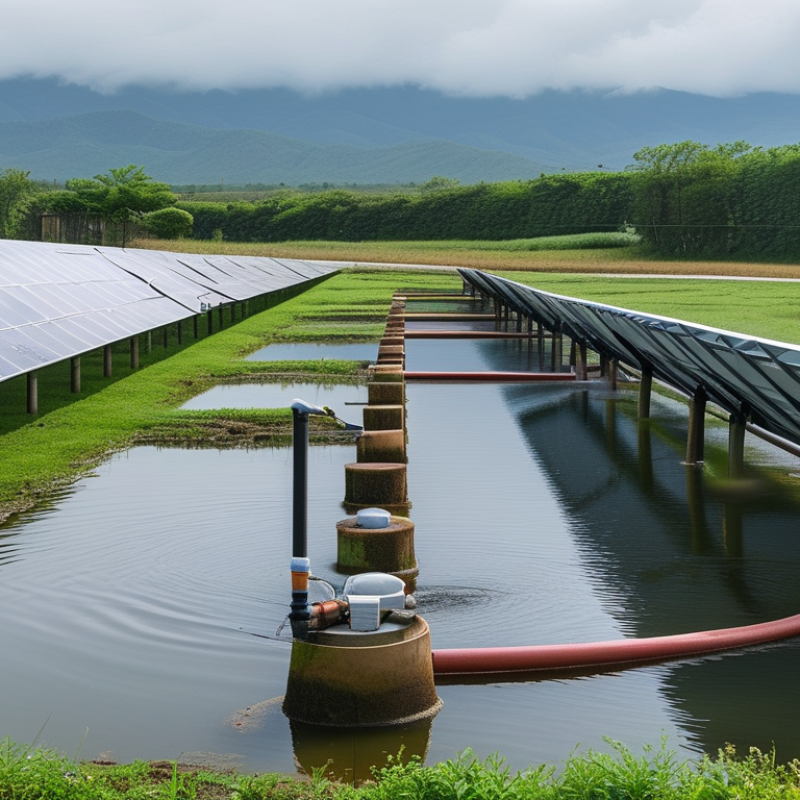
How a Solar Pump Inverter Operates Without a Water Tank
A solar pump inverter can operate without a water tank by matching pump speed with available sunlight. Solar panels produce variable DC power, while the inverter uses MPPT control to capture the highest practical output. It then converts that power into suitable AC power for the pump. When clouds pass, the inverter reduces frequency and flow instead of stopping immediately. The system can feed sprinklers, drip lines, livestock troughs, or a pressurized pipeline directly.
This design is useful where daytime water demand is predictable. The pump starts after irradiance reaches its minimum level and stops during insufficient sunlight. A pressure sensor, float switch, and dry-run protection can prevent damage.
Pump selection must consider total dynamic head, pipe losses, and changing well levels. A small tank is not required, but another buffer may still help. A buried reservoir, pressure vessel, or soil moisture schedule can absorb flow changes.
The FAO AQUASTAT database reports that agriculture accounts for roughly 70% of global freshwater withdrawals. Efficient control therefore matters beyond convenience. The IEA PVPS Trends 2024 report recorded more than 400 GW of new solar capacity installed worldwide in 2023, showing why direct solar pumping is gaining attention. Still, a tankless system is less forgiving. It cannot supply water after sunset without batteries or an alternative source. In field commissioning, cloudy mornings often reveal poor sizing before hardware failure does. I would not treat “no tank” as universally better. It saves space, yet demands accurate design and regular monitoring.
Key Conditions for Direct Solar Water Pumping
A solar pump inverter can work without a water tank, but direct pumping depends on strict site conditions. The pump runs when sunlight is available, so water delivery usually falls in the morning, during clouds, and near sunset. According to IRENA’s Renewable Capacity Statistics 2024, global solar photovoltaic capacity exceeded 1,400 GW by the end of 2023. However, abundant solar capacity does not guarantee reliable pumping at one site.
The key condition is matching water demand with daytime solar production. Engineers should calculate the total dynamic head, pipe friction, well depth, and required daily volume. The inverter also needs maximum power point tracking and variable-speed control. These functions help the pump adjust as sunlight changes. A field assessment should measure solar radiation across seasons, not only on a clear afternoon. The World Bank’s solar irrigation guidance warns that poorly sized systems can increase water waste and groundwater pressure. That risk is easy to underestimate.
Tips: Use an elevated storage tank when demand continues after sunset. If direct pumping is essential, add a flow sensor, dry-run protection, and a low-water cutoff. Select a pump that can start under weak morning sunlight. Oversizing the array may improve cloudy-day performance, but it raises project cost. A smaller pump may deliver steadier results. That sounds counterintuitive. Battery backup is possible, yet it often adds maintenance and replacement costs. In practice, direct pumping without storage can succeed for daytime irrigation, livestock watering, or filling a nearby channel. It becomes less dependable when users expect constant household pressure.
How Water Demand Affects System Performance
A solar pump inverter can operate without a water tank, but water demand becomes the system’s hardest control variable. Solar input rises after sunrise, peaks near midday, and drops under clouds. Household demand often peaks before breakfast and after sunset. Without storage, these schedules rarely match.
A tank is not always necessary. Irrigation can run directly when demand follows strong sunlight. Variable-speed control should reduce motor speed as irradiance declines. However, low demand may cause frequent starts, unstable pressure, or inefficient throttling. A small tank may cost less than oversized panels and complicated controls. The calculation is easy to underestimate.
FAO AQUASTAT reports that agriculture accounts for about 70% of global freshwater withdrawals. This makes demand planning critical, not optional. Opening several irrigation lines can suddenly increase flow. Closing them may push the pump toward deadhead operation.
Pressure sensing, dry-run protection, and accurate flow measurement are practical safeguards. The FAO Irrigation and Drainage Paper 56 also links irrigation needs with crop evapotranspiration, which changes daily and seasonally.
For domestic systems, the WHO and UNICEF Joint Monitoring Programme reported that 2.2 billion people lacked safely managed drinking water in 2022. That figure reflects real pressure on supply reliability.
In practice, demand records are often incomplete. Engineers may size systems from ideal sunlight, then discover cloudy mornings and sharp evening peaks.
Essential Components for Tank-Free Pumping Systems
Can a Solar Pump Inverter Work Without a Water Tank?
A solar pump inverter can operate without a water tank. It connects solar panels directly to a compatible pump. The inverter adjusts speed as sunlight changes. This arrangement suits irrigation, livestock watering, and remote wells.
IRENA reported 1,419 GW of global solar photovoltaic capacity by the end of 2023. Solar hardware is widely available, but reliable pumping still depends on system design. FAO AQUASTAT reports that agriculture uses about 70% of global freshwater withdrawals. Efficient control matters. Without a tank, water production follows sunlight, so cloudy afternoons may reduce pressure.
Tips: Select an inverter with maximum power point tracking, soft starting, and dry-run protection. Add pressure and flow sensors for stable demand control. A variable-frequency drive can slow the pump during weak sunlight. Install filters before the pump, especially near open canals or sandy wells. Include surge protection and proper grounding.
The essential components are a correctly sized solar array, solar pump inverter, submersible or surface pump, sensors, cables, and protective devices. A small pressure vessel can reduce short cycling, even when no storage tank exists. IEC 62253 guidance supports careful testing of photovoltaic pumping systems. Field designers often overlook pipe friction. That mistake can create weak outlets and overheated equipment. In practice, a tank-free system is workable, but it needs honest water-demand estimates and seasonal sunlight checks.
Can a Solar Pump Inverter Work Without a Water Tank?
Yes. A tank-free solar pumping system can operate when the inverter continuously adjusts pump speed to available solar power. The system still needs a photovoltaic array, MPPT solar pump inverter, compatible pump, dry-run protection, a check valve, and flow or pressure monitoring.
Engineering example: estimated flow at a constant 20 m total dynamic head using a 1.2 kWp PV array, 85% electrical-system availability, and 55% pump hydraulic efficiency. Actual output varies with irradiance, temperature, pipe losses, pump characteristics, and the inverter's minimum operating threshold.
PV Array
Supplies variable DC power.
Solar Pump Inverter
Uses MPPT and variable-frequency control.
Protection Devices
Dry-run, overload, overvoltage, and undervoltage protection.
Hydraulic Controls
Check valve plus flow or pressure sensing.
Advantages and Limitations of Operating Without a Water Tank
Can a Solar Pump Inverter Work Without a Water Tank?
A solar pump inverter can operate without a water tank when water is used immediately. The inverter adjusts pump speed as sunlight changes. Water may flow directly to drip lines, livestock troughs, or a raised irrigation channel. This arrangement removes tank construction, cleaning, and float-valve maintenance. It also saves space. According to IRENA’s Renewable Power Generation Costs in 2023, utility-scale solar power averaged about USD 0.044 per kilowatt-hour, supporting the economic case for direct solar pumping. However, that figure describes electricity generation, not the complete pumping system.
The main advantage is simplicity. A farmer can pump at midday, when solar output is strongest, and irrigate nearby crops. No tank means less structural cost and fewer leakage points. The limitation is equally clear: sunlight is not constant. A passing cloud can reduce flow within minutes. There is no stored water for evening use, night-time livestock demand, or short dry spells. FAO reports that agriculture accounts for roughly 70% of global freshwater withdrawals, so poor water timing can create serious waste. A pressure sensor, dry-run protection, and correctly sized borehole remain essential.
A practical design test is simple. Measure the required flow at 8 a.m., noon, and 4 p.m. Then compare it with actual solar output. Small systems often appear cheaper without storage, but users may later add batteries or emergency pumping. That change can erase the original saving. Direct pumping works well in predictable demand patterns. It is less forgiving when weather, irrigation schedules, and water levels keep changing. Even experienced installers can underestimate this weakness.
Conclusion
Can a solar pump inverter work without a water tank? Yes, it can, provided the system is designed for direct solar water pumping. The inverter converts changing solar energy into suitable power for the pump, allowing water to be drawn from a source and delivered directly to the point of use. For reliable operation, the water source must be adequate, the pump must match the required flow and lifting height, and the solar array must provide sufficient power during expected sunlight hours. Protection against dry running, overload, low voltage, and unstable water supply is also essential.
Without a tank, system performance depends closely on daily water demand and weather conditions. Low or variable sunlight may reduce flow, while sudden high demand can exceed the pump’s capacity. This arrangement can reduce equipment, maintenance, and installation costs, but it offers less water storage and less flexibility during cloudy periods or peak demand. A properly sized pump, inverter, solar array, control system, and optional backup supply can help maintain dependable tank-free operation.

 NovaVolt Service